
Relational Inclusion blog #47
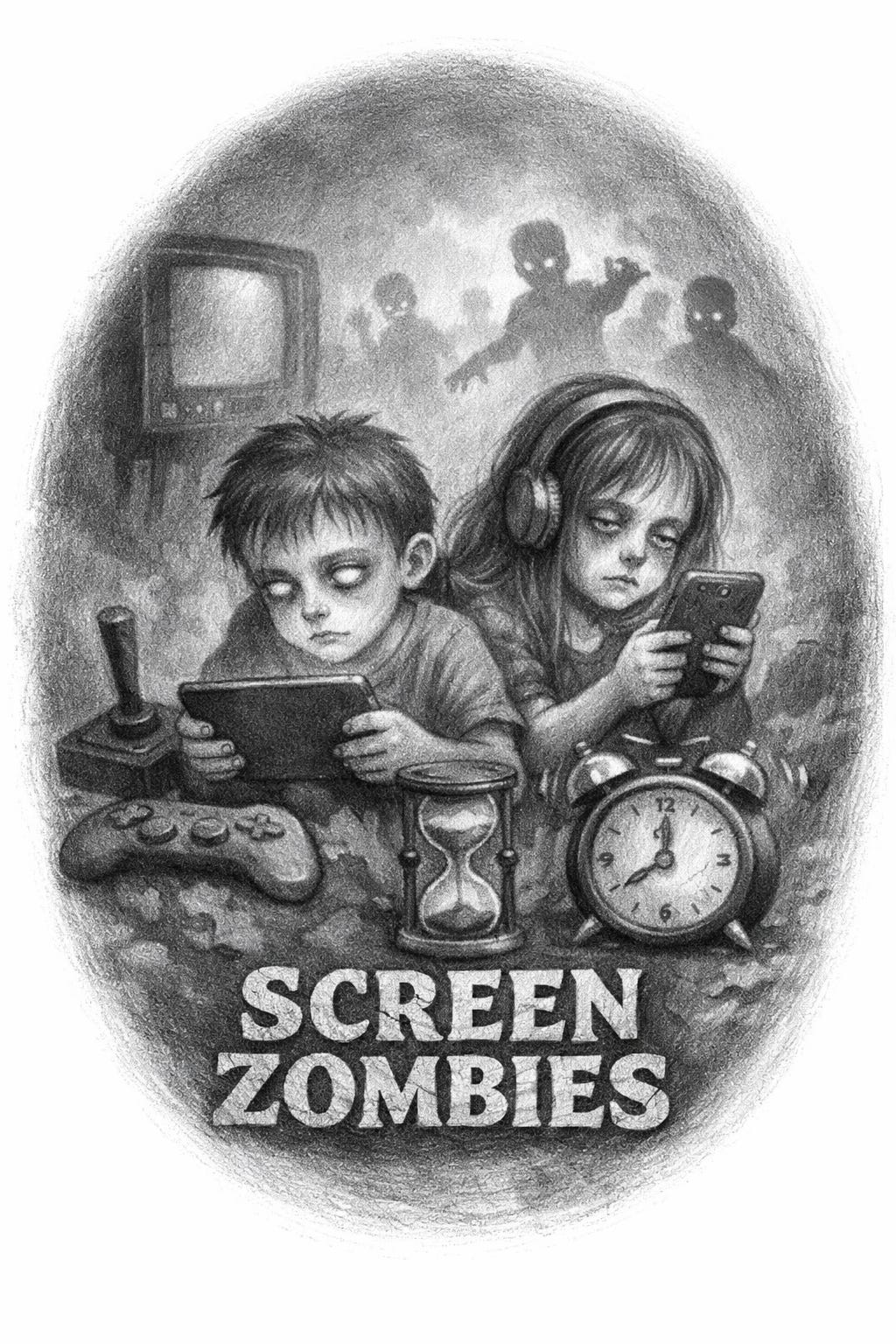
Screen Zombies


Somehow we’ve managed to turn two out of our three children into screen zombies.
(Was it Meat Loaf who sang “two out of three ain’t bad”?) We’ve read all the stuff about how harmful screens and tablets are for children and, although we haven’t quite managed a really strict screen curfew, we do try to limit how much time they spend glued to tablets or tellies. When I say “we”, I mostly mean my wife — I’m terrible at sticking to clear limits.
There are guidelines, of course. Something like two hours or less per day for children over six, and an hour or less for under sixes. Aside from anything else, try allowing the older children longer and the younger children shorter and see what happens when you attempt to stop the youngest while the older ones are still watching. I digress.
What I have noticed is this — and it applies to my eldest and my youngest equally. The day starts. They’re in a great mood. Cooperative. Helpful. (Jobs done. No screens before lunch. All that.)
“Can we watch our screens now please?”
“Sure — you’ve got half an hour. Alexa, set a timer.”
All good so far.
Half an hour later the alarm goes off.
“Ok guys, you’ve got five minutes.”
We’ve learned that asking them to stop instantly doesn’t work. I can empathise with that — if I’m reading a book and someone tells me to stop now, I always want to finish the page.
Five minutes passes.
“Ok screen zombies, time to turn off. Shoes on. Time to go.”
We say it jokingly with just the tiniest hint of irony because then the fun begins. The enraged chimp is well and truly released. It’s as though I’ve threatened to cut off their fingers.
My son manages to come off his screen, though the screaming starts immediately.
“I am NOT going out. I am NOT putting my shoes on. No. No. NO.”
He’s actually done better than daughter number one, who is still watching YouTube Shorts (and I might be showing my age but these are mind-numbingly dull).
“Time to turn off now please.”
Ignored.
“Time to turn off now please.”
“No.”
“It’s time to come off now. You had a time limit and a five-minute warning.”
“NO.”
“We’re all ready to go out.”
“NO. I’M NOT GOING OUT.”
“Please turn the telly off.”
“I HATE YOU. YOU’RE THE WORST PARENTS IN THE WORLD.”
Eventually the television goes off. Eventually the shouting stops. Then the tears start.
After the pantomime is over, we have a cuddle.
And once we can talk — once her nervous system has settled — I ask her, “What was that all about? We only asked you to come off the screen, and we gave you lots of notice.”
This conversation is well rehearsed. Well discussed. But we’re still practising. We’ll probably always be practising.
She says, “It’s just… it kind of sucks me in. And I can’t let go or get out. And I don’t want to.”
Sometimes she has a way of saying things so simply. This isn’t about too much being asked. It’s about how hard it is to stop.
I read something about this somewhere and, I can’t for the life of me find it now. It was comparing computer games in the 80s and 90s with those of today. I want to avoid rose‑tinted glasses — I’m not particularly keen on going back to the 80s — but the comparison stuck.
Games like Pac‑Man, Super Mario Bros. and Sonic the Hedgehog were built around finite lives. Death mattered. Levels were fixed. You had to work something out to move on. Enemies behaved consistently. Reward was delayed. Failure meant starting again.
And because of this — probably accidentally — we learned patience, frustration tolerance, persistence, strategic thinking, and emotional regulation.
“Right,” you’d think. “Try again. Differently.”
I don’t think this was intentional. The system just required it. A fortunate by‑product.
Many modern games, TV and platforms like YouTube work differently now. They are built around endless scrolling, rapid feedback loops, soft failure, and external boosts. You don’t really lose — you just restart instantly, skip the difficulty, or watch an advert.
They are designed for engagement, dopamine and retention.
Not reflection.
In fact, researchers have found this phenomenon in modern games as well. As Hefkaluk and colleagues put it, “Through failure, albeit difficult to learn, is a skill that is valuable across many aspects of life.” (Hefkaluk et al., Fail, Fail Again, Fail Better: How Players Who Enjoy Challenging Games Persist After Failure in Celeste (International Journal of Human–Computer Studies, 2023). But modern platforms often remove that friction. Entirely.
Now I’m not writing about games or television being bad now. I’m writing about what happens when friction is systematically removed from formative experiences.
Old games quietly taught, “You don’t get this yet — but you could.”
Many modern systems say, “Here — have another go immediately. Don’t sit with the discomfort. Instant gratification is always on hand.”
This subtle shift has subtle but significant consequences. Our expectations around behaviour, attention and tolerance remain rooted in the block graphics of the 80s, but our children aren’t living there. They are growing up surrounded by consciously designed, highly sticky systems. And the fight to unglue them from that web is hard. I can see why sometimes it’s easier to give in.
Stickability doesn’t come from hardship alone. It comes from bounded struggle with meaning. An Alexa timer won’t fix that. Shouting and consequences won’t either.
The question isn’t whether screens are good or bad. It’s whether we’re willing to adapt how we support children in a world that no longer asks them to practise letting go — while still expecting them to respond on cue, hold agency, and somehow become their own person.
My one a day quotes for this week are:
1. Always becoming, never arriving. (unknown)
2. “When everything around me is moving so fast, I stop and ask: is it the world that’s busy, or is it my mind?” (Haemin Sunim – the things you can see only when you slow down)
3. Not instruction but permission. (unknown)
4. Children are great imitators. So give them something great to imitate. (unknown)
5. Regulation is learned in relationship, not in isolation. (unknown)
6. What we practise, we become. (unknown)
7. I’m mindful of the danger of drawing only on evidence that supports my position. Through respectful disagreement and debate, our professional understanding grows. (Mary Myatt)
My two print and stick to the wall images this week are:
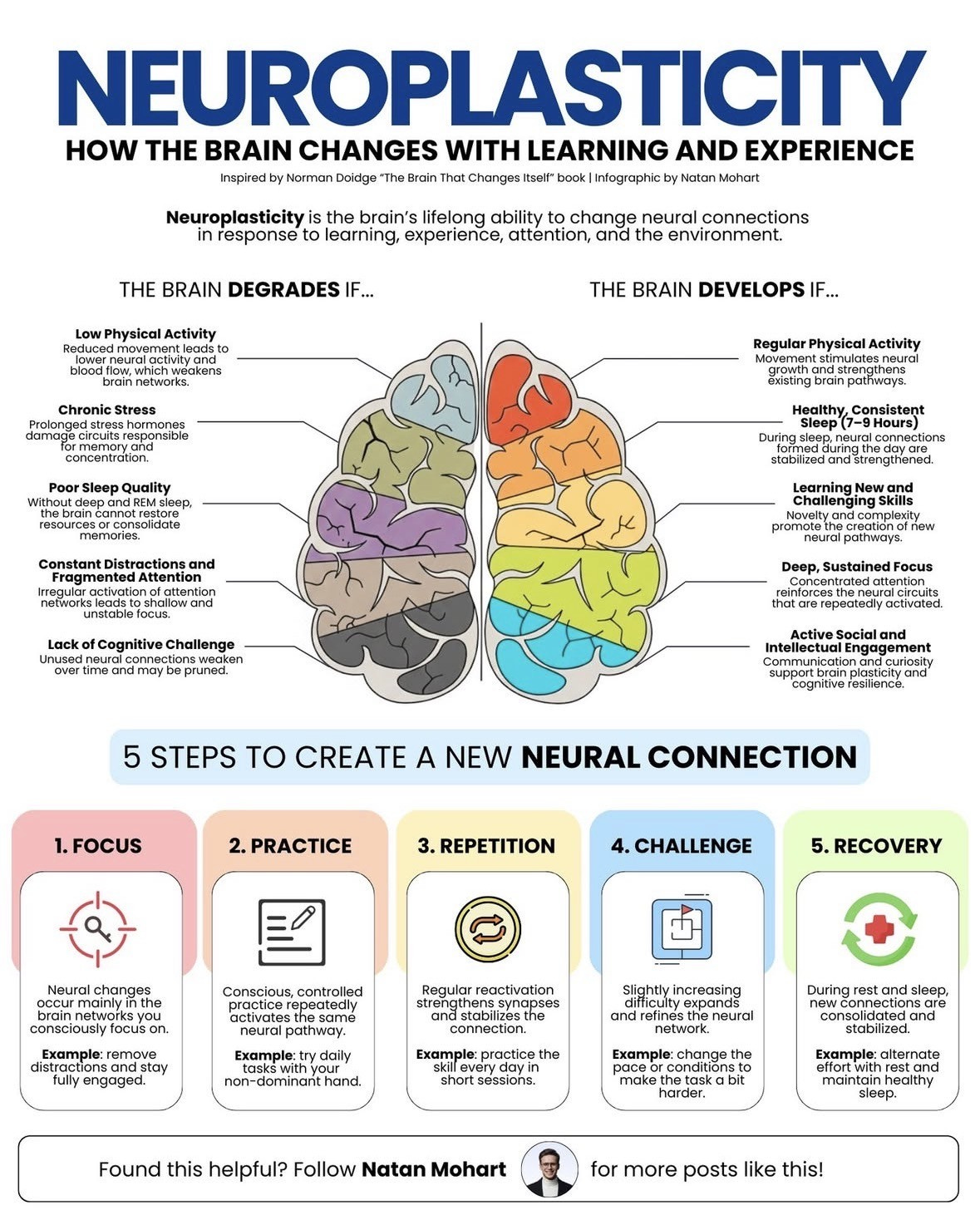
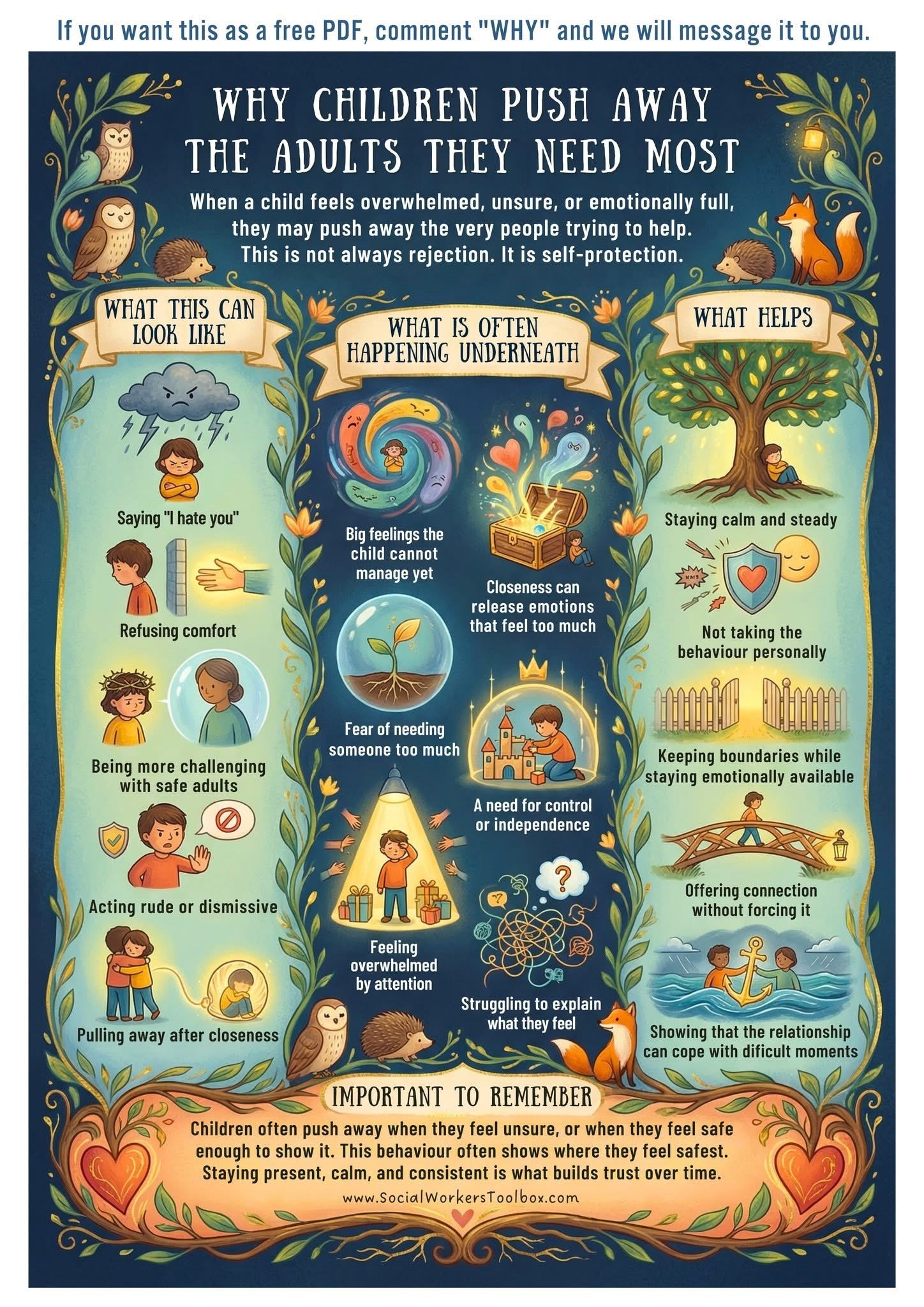
My recommended read this week is about gaming: https://www.sciencedirect.com/science/article/pii/S1071581923002082
Our book, Educating Everyone: An Introduction to relational Inclusion in Schools is out now and you must buy it and tell everyone else to buy it. It is available pretty much everywhere that sells books or you can get it here: Educating Everyone
Finally, I’d like to share a quote which has really stuck in my mind:
We worry about what a child will become tomorrow, yet we forget that they are someone today. (Stacie Tauscher)
Thanks for reading
Anthony Benedict
CEO Ambition Community Trust
Previous blogs can be viewed or downloaded as PDFs from here: Blog Archive

Subscribe for free to receive new posts and support my work.
If you find the Relational Inclusion blog useful, feel free to share with your networks.