
Relational Inclusion Blog #15
Shouting


This week I want to write about shouting. It’s a topic I think and reflect on often. And let’s get one thing straight from the start. I am a reformed shouter. I am not being hypocritical. I spent at least 20 years of my career shouting at children. It was an important piece of my teacher toolkit.
I’ve shouted at individual children; I’ve shouted at full classes and I’ve shouted at whole year groups. I’ve even shouted at my own children. Now don’t get me wrong, shouting wasn’t my only tool; I also worked hard to develop relationships and trust. It’s just that shouting was a go to strategy. Thankfully I can say my shouting is in remission. I have worked very hard at not being a shouter. Alan and I do touch on shouting on our book (see chapter 1).
The reason I want to talk about shouting this week is because of something a teacher from a different Trust said to me. Sadly, they will not be a teacher come September which is another story and another loss for the profession. Her imminent departure from teaching has led her to notice things differently, maybe the way you can only see things when your head is starting to look towards pastures new.
She said that she walked past a classroom and one of the key stage leads was tearing strips out of their class. She said the shouting was so loud that another member of staff in a nearby office had their head in their hands covering their ears. I am not exaggerating.
And she said to me, “If we saw a parent shouting at a child like that it would be a safeguarding issue wouldn’t it?”
Believe it or not I’d never thought about it like that before.
I can remember in my first headship we had some really dysregulated parents (I used to say they were really aggressive until I knew better) who would come in and shout at our receptionist and anyone else they could find. As SLT we had long discussions about it. We thought about hospitals where signs were clearly displayed referring to the NHS zero tolerance policy and stated that patients who are aggressive or rude to any of the doctors or practice staff may be removed from the practice list.
We copied the signs and put similar in our reception areas and meeting rooms. I wanted to protect my staff and no-one was going to come in and shout at or threaten them.
I’m sure you can see where I am going?
Imagine if at work you were a little late for a meeting. You began to fast walk/jog to the meeting room and as you did so your shirt became untucked. At which point someone bigger and older and more senior than you, put out their hand. Forced you to stop, told you to step into their office. Put their face so close to yours you could smell the coffee on their breath and then screamed at you.
Now imagine, nervous system triggered, that you retaliated and shouted back, or even swore. And then you got a final written warning or even sacked - hardly seems fair now does it?
I know there are schools who celebrate their non-shouting polices. I also know that often in these same schools there is lots of shouting, but it’s hidden away in small offices. I would love to say shouting is a thing of the past. But let’s not pretend to ourselves. Shouting is still very much a go to strategy. I just don’t think it’s ok anymore.
This comes very much from a reformed shouter. It’s not easy and there are so many excuses I could make for myself and my behaviour but the reality is it’s poor modelling and nearly always represents a lack of self-control. It’s a perfect example of dysregulation. The only time it might be okay to shout is if someone is genuinely in danger, and even then it doesn’t always work.
Like with many things, if shouting actually helped, if it changed behaviours for the better, I might think differently about it. But as we all know, at best it just creates another generation of shouters and actually advocates bullying.
At worst - well I’m going to quote my own book here:
I once shouted at a year 10 girl when worked in Salford. When I’d done she looked at me and said, ‘Is that the best you’ve got? That’s nothing compared to what my dad does.’
If my blog does nothing else for you - let’s at least try to stop shouting at children.
My first quote is from Matilda the movie (the old version). Sometimes it seems too many schools think and act like this:
1) Listen you little wiseacre. I’m smart, you’re dumb. I’m big, you’re little. I’m right, you’re wrong. And there’s nothing you can do about it.
My second quote is about normalising behaviour and I found it on my feed about four hours after writing the first draft of this blog (there’s a bit of frequency illusion for you!)
2) The fish never discovers that it lives in the water. In fact, since he lives immersed in it, his life goes by without noticing its existence. Similarly, behaviour that is normalised in a dominant cultural setting becomes invisible. (Michael Foucault)
My next two quotes are about where the responsibility for change comes from. They’re from a book called: The little book of big stuff about the brain by Andrew Curran.
3) There is nothing occult or sinister or hidden about our emotional selves - there is just a whole pile of circuitry that can be adjusted and changed and remodelled as required.
4) There is nothing about ourselves that we can’t fundamentally change if we are prepared to do the work required.
My final quote is from one of my favourite authors on this subject, Lori Desautels.
5) Behaviour management is about adults. A dysregulated adult can never regulate a dysregulated child.
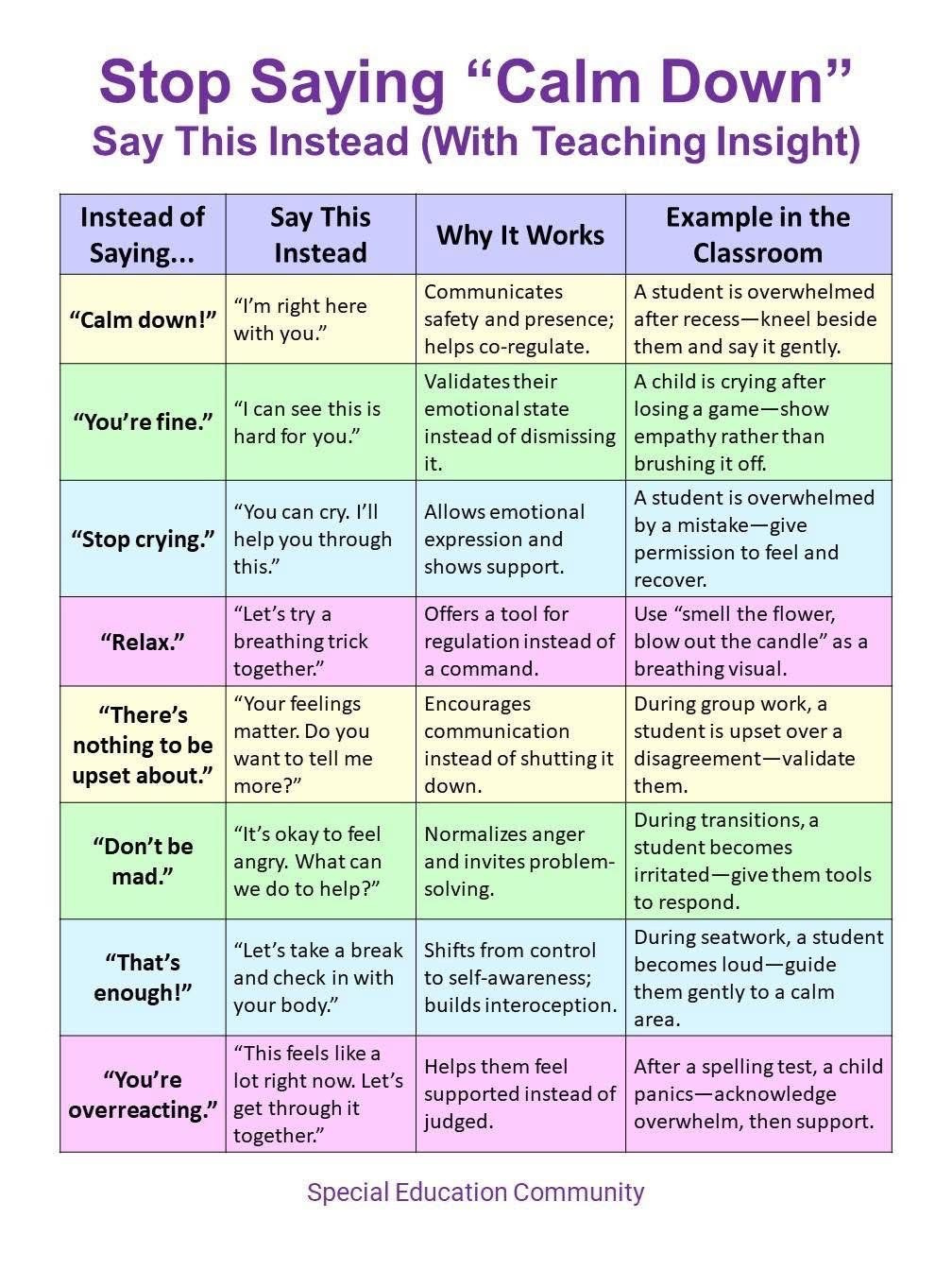
My first print off and pin to the wall image for this week is:
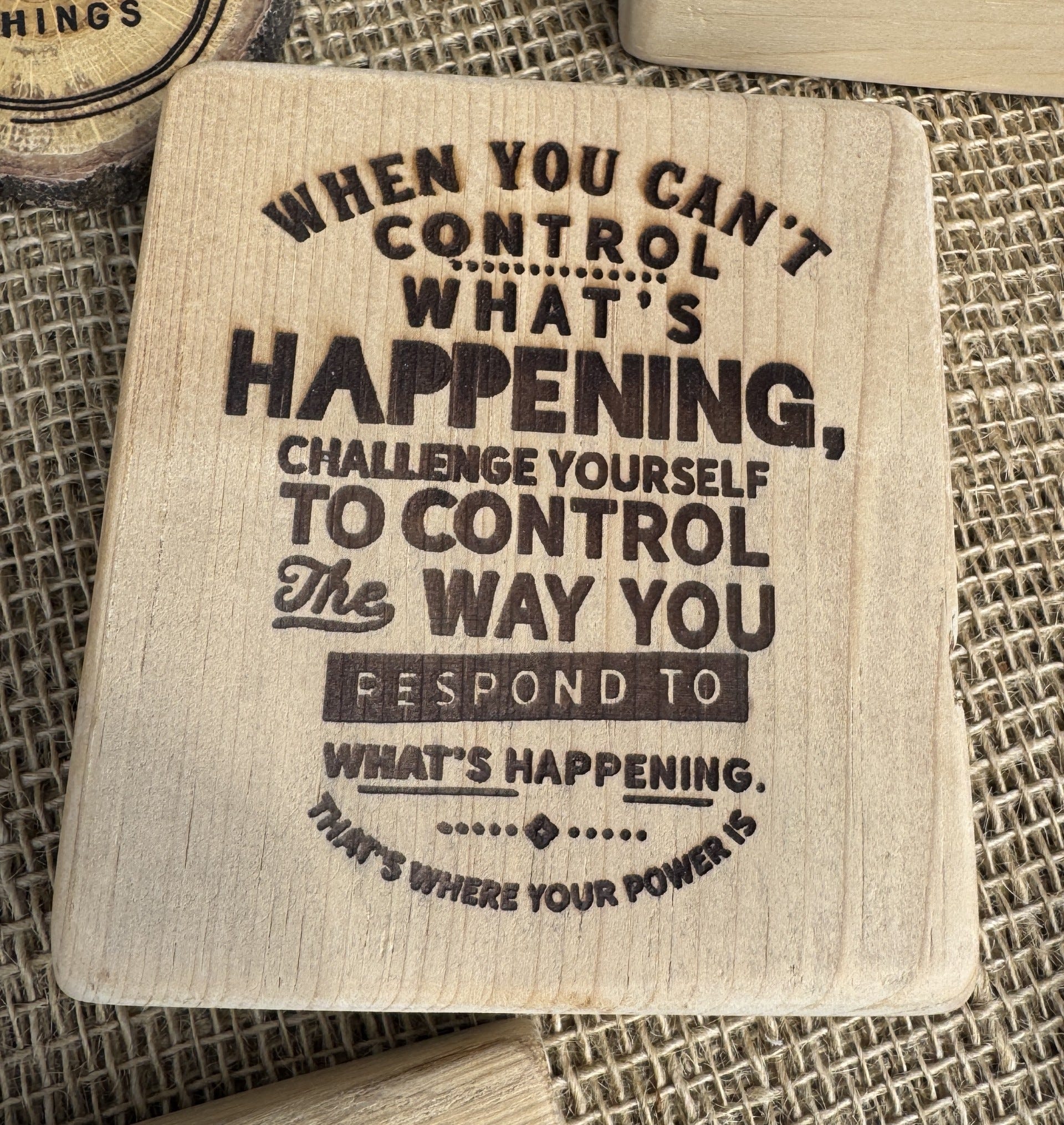
My second I found when I was on a walk during bank holiday weekend. There was a stall outside a house with these homemade plaques on. This one I think is quite fitting:
I left mainstream education in order to run a Pupil Referral Unit about five years ago. In that time, I have lost count of the number of times Headteachers have contacted me to say they are about to permanently exclude a child as ‘sending them top a PRU will help them get what they need. There is a big movement to manage the current behaviour crisis through the development of Internal AP. So I thought this week’s recommended read about What excluded children think about alternative provision might just be of interest.

If you have read any interesting books which support / develop / further understanding of all things relational inclusion, please add a comment below and I will include it in next week’s blog. (I’d be sad if book corner didn’t last more than a few weeks!!)
If you find the Relational Inclusion blog useful, feel free to share with your networks.
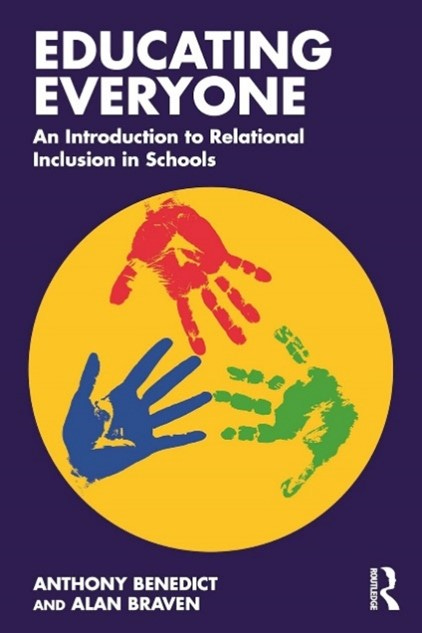
Our book, Educating Everyone: An Introduction to relational Inclusion in Schools is out now and you must buy it and tell everyone else to buy it. It is available pretty much everywhere that sells books or you can get it here: Educating Everyone
Our second book study takes place tomorrow at 4-5.30 on-line. If you would like to join us, tickets are free but limited. You can book on here: Book Study 2
Thanks for reading
Anthony Benedict
CEO Ambition Community Trust
Previous blogs can be downloaded as PDFs here: Blog Archive

I have never liked shouting. Tested it out once on one of my staff and never did it again .. at the time I was trying to find a way to ‘get through’ and it seemed like a last resort. Instead of ‘getting through’ I instead ‘got to know’ her